 2 hours ago
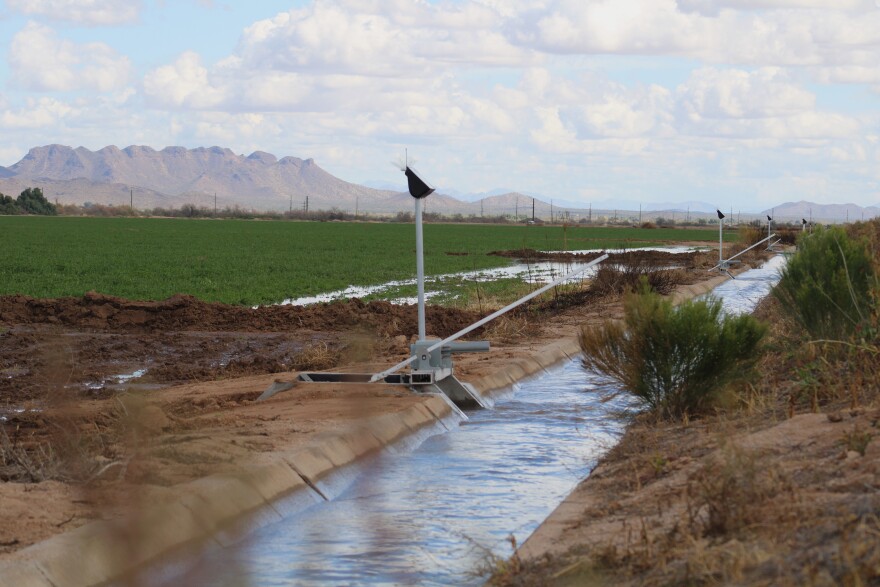
It’s a cool morning in the desert, just south of Phoenix. David DeJong is watching water rush through a canal and spill out onto a field of alfalfa. It streams through high-tech gates that make sure water flows onto the crop in precise amounts.
“The key here is to get the water across the field as quickly as possible,” DeJong said as the ground began to saturate.
DeJong is director of the Pima-Maricopa Irrigation Project and oversees watering on these fields, which belong to the Gila River Indian Community. It used to take eight to 12 hours to soak these fields. With the new gates, DeJong said, it takes about one.
GRIC has rolled out a number of highly publicized conservation projects over the past few years, reducing its water use and leaving the extra in Lake Mead, the nation’s largest reservoir. Much of that work was done with federal money under the Biden administration.
Now, large corporations are helping pick up the check.
Federal spending on water infrastructure in Arizona and the rest of the Colorado River basin has gone down sharply under the Trump administration, and big companies are making relatively small, targeted investments amid that gap.
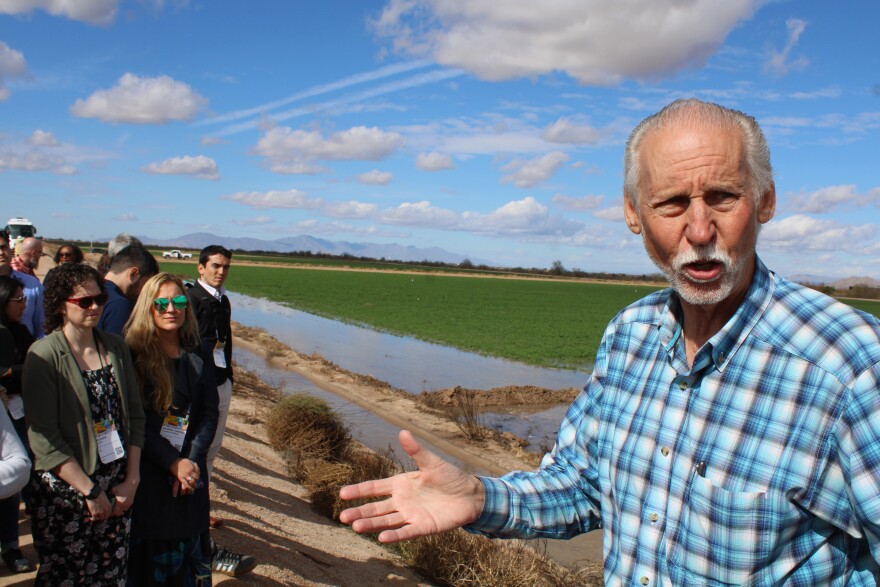
Shannon Quinn, who works on water conservation for the consumer goods giant Procter & Gamble, stood next to DeJong and explained her company’s role in the new irrigation system. P&G and Google paid for about 60% of the project.
Alex Hager
/
KJZZ
“Water is essential to our business,” Quinn said. “We need it to make our products. Suppliers who are making products for us need it, and then our consumers need it. So it's central.”
P&G has manufactured Metamucil, a dietary fiber supplement, in Phoenix since the 1970s. Quinn said the company is focused on making its water use more efficient and funding conservation projects near the places it operates.
‘We’ve got risk, and we need to pay attention’
P&G’s investments are part of a trend across the Colorado River basin, which stretches from Wyoming to Mexico. Broad, regionwide data about corporate spending on water conservation is not available. The nonprofit Bonneville Environmental Foundation, which channels corporate money to water-saving efforts through its “Business for Water Stewardship” program, has contracted more than $27 million from major companies for such projects since 2020.
Todd Reeve, CEO of the Bonneville Environmental Foundation, said those companies were not always eager to chip in.
“I was out for years trying to convince companies that this made sense,” he said, “Investing in this kind of work was good for risk reduction — physical risk reduction, reputational risk reduction. Companies always said, ‘We just can't do it unless there's a two year return on investment.’”
Alex Hager
/
KJZZ
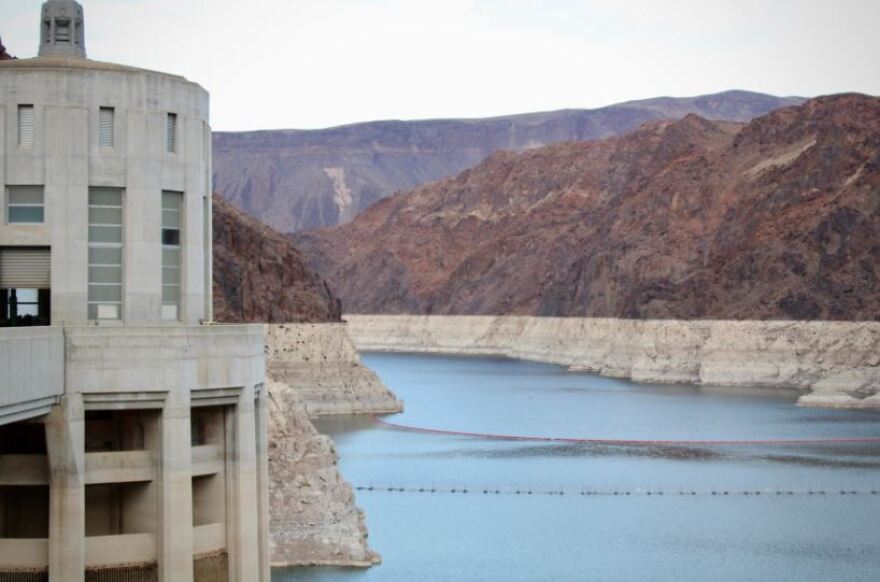
Reeve said there was a recent breakthrough as wildfires spread across the West and the amount of water stored in Colorado River reservoirs plummeted.
“All of a sudden there was a sort of an awakening,” he said. “[Companies] realized — we've got exposure, we've got risk, and we need to pay attention.”
Reeve said companies are now getting involved for two big reasons: preventing harm to their production capabilities and preventing harm to their reputation.
First, those companies are recognizing that water shortages could hurt their ability to operate long-term in the desert Southwest. Basically, if those shortages get deep enough, it could become prohibitively expensive and difficult to keep running an existing factory that makes shampoo or laundry detergent.
Second, companies that use lots of water think it will turn away customers if it looks like they’re making water shortages worse.
“When we're facing long-term drought, we're facing water cutbacks, etc.,” Reeve said, “instead of people pointing fingers, which is usually what happens right away, is people will say, ‘You know, this company has been a partner here for 10 years, helping Arizona do more with less water.’”
Diversifying the money pool
While corporate spending has helped boost water-saving projects in Arizona and the Colorado River basin, it accounts for a relatively small portion of money spent on conservation at a time when the region faces steep cutbacks to water supply and a need for massive, costly infrastructure upgrades.
Federal spending on drought resilience surged under the Biden administration. The Inflation Reduction Act alone designated $4 billion for Colorado River work. That kind of spending has fallen dramatically under Trump, but the need for expensive water-saving measures has not.
Experts say corporate funding does not fill the gap left by federal funding pullbacks, but can help in targeted ways.
“I think it's broadened the pool of funding and just diversified it,” said Nate Rees, Arizona state director for the conservation group Trout Unlimited.
Alex Hager
/
KUNC
Trout Unlimited is carrying out a meadow restoration project in eastern Arizona, improving wildlife habitat and making the site more resilient to drought and wildfires. The group is framing it as a way to protect streams that feed the Colorado River and Phoenix metro area. Two companies and a foundation — including Microsoft — helped pay for it. They funded about 40% of the project’s $1.8 million price tag.
A number of experts who track conservation funding said corporations are less interested in paying for the behind-the-scenes planning aspects of water-saving projects, which can often be a drawn-out slog through paperwork and permits. Instead, they prefer to fund the public-facing portions, after that paperwork has been completed.
Rees said that was the case with Trout Unlimited’s Thompson-Burro meadow restoration.
“Federal dollars,” he said, “At least in my case, have covered planning portions of these projects, and then corporates come in for implementation on the landscape.”
Rees said he hopes this project can show corporations the effectiveness of their spending and help convince them to keep investing in similar conservation work in the future.
Sarah Porter, director of the Kyl Center for Water Policy at Arizona State University, said companies’ investments in water conservation are not yet making a big difference, but can be valuable because of the message they send.
“The main reason I am always happy to see corporate engagement in this way is that it shows everybody that this is something worth investing in and that they really care about it,” she said. “When we see companies step up and announce goals, and then they, you know, put real money down to get to those goals, that paves the way for other corporations and other institutions to follow.”
Porter said that message is also valuable for companies’ reputations with consumers and potential new hires.
“I once asked a company that seemed to be doing very well — going above and beyond with water conservation — ‘Why are you doing this? It surprises me,’” Porter said. “And they said, ‘Because we can't attract the kind of people we want in our workforce unless we show that we're really putting our money where our mouth is.’”
Porter said, going forward, it will be important to keep an eye on the impact of companies’ conservation spending to make sure the investments are actually benefiting a water-scarce region and not just bringing corporations a reputational boost.
“We still need to have reporting,” she said. “We need transparency.”